

How Do You Repair Thin Wall Polyethylene Water Pipes
Unlike Type of Pipe Repair Corrosion
Introduction
The corrosion of steel pipage and its related components is a continuous and nigh unstoppable process. The end product, rust, is the result of an electrochemical reaction through which the higher energy candy metal is slowly reverted back to its naturally occurring course — metal ore.Hither's a await at xi different corrosion types and failure atmospheric condition.
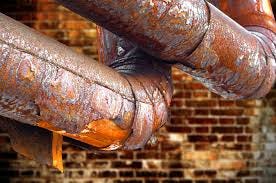
Piping Failures
piping failures are often the beginning sign of a corrosion problem. Withal in many examples, signs of an impending pipe failure have been clearly evident for months or years and ignored. Failures can be minor, in the grade of a pinhole leak, or catastrophic, with significant losses due to water impairment also as the price of pipage replacement. When detected, the problem can be arrested hands with pipe leak repair kits readily in the market.
Piping Repairs
Pipe repairs take various forms ranging from temporary piping clamps to pipe leak repair kits and the replacement of the pipe department. Very frequently, 1 or multiple private failures are fixed without further investigation of the subconscious cause. While sure sections of pipelines are subjected to heavy corrosion, it is necessary to adopt preventive maintenance measure to perform composite wrapping or repairs on the afflicted pipe section before a catastrophic failure happens.
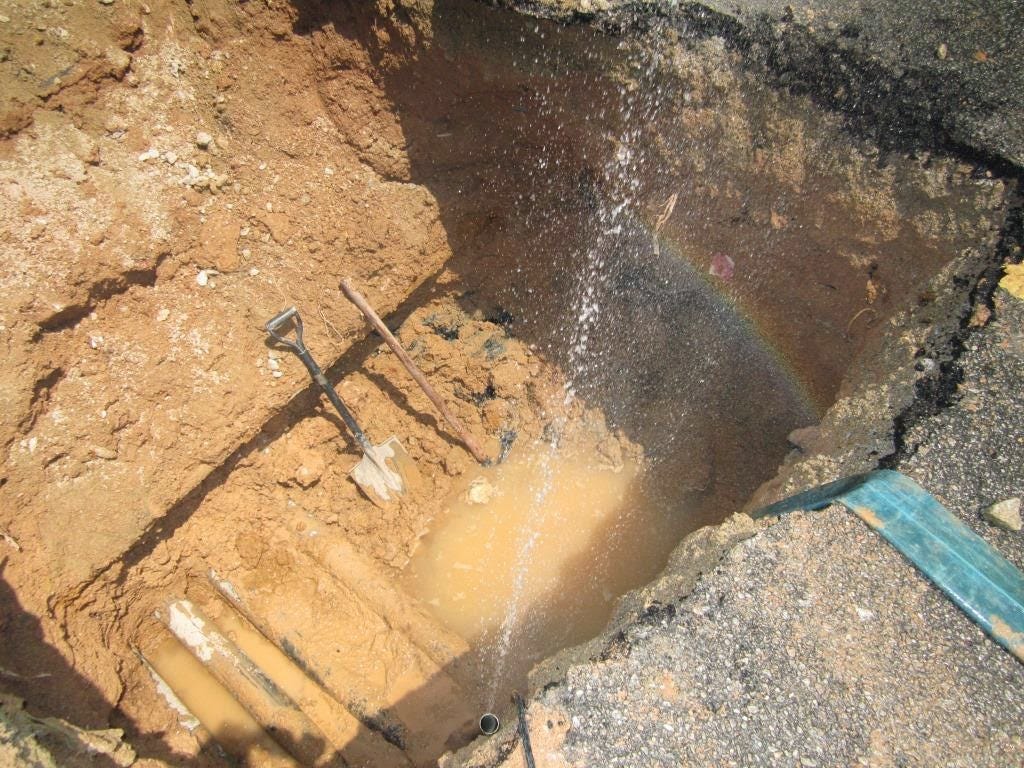
Pipe Thread Leaks
Pipage threadsare an inherent indicate of weakness, with approximately l percent of the pipe being wall cut away. Leaks occurring from pipage threads are a common sight and information technology is usually a get-go sign of a corrosion problem. While it is not an easy task to repair pipe thread leaks, the problem can be resolved with proper pipage repair techniques and using appropriate epoxy repair cloth and pipe leak repair kits.
Galvanic Induced Failure
Galvanic corrosions occur when unlike metals are in contact with each other. Information technology commonly occurs when carbon steel pipesare threaded to brass valves, and more than serious galvanic corrosion happens at galvanized steel to brass valve connections.
Weathering Impairment
Of all forms of corrosion acquired to piping systems, weathering damage due to rain, snow, atmospheric weather, or cooling tower overspray is the easiest to foreclose. Most weathering damage occurs over a long time period due to a lack of maintenance and the corrosion will reduce the pipe wall thickness subjecting the pipe to leak easily.
In such cases, it is necessary to identify the structurally weaken and damaged locations via methods such equally ultrasonic thickness gauging). Thereafter, preventive maintenance strategy east.g. applying composite wrapping repair to reinforce the pipe wall thickness and removing the effects of weathering direct on the pipage surface will help extend the pipage service lifespan.
Corrosion Under Insulation
Corrosion nether insulation is a widespread and typically hidden threat. The issue tin can arise due to insufficient insulation thickness, inappropriate insulation type or it is improperly installed.
Pipe leaks tin occur regularly due to the difficulty to detect leaks before it happens. It is advisable to apply readily available pipe leak repair kits on such impromptu incidents.
Microbiologically Influenced Corrosion
Microbiologically influenced corrosion (MIC) is, by far, the nearly astringent and threatening form of corrosion to HVAC piping and burn down protection systems. It is caused by the presence of diverse microbiological agents nether specific environmental conditions and can in some cases result in an advanced and widespread failure of entire pipage systems within but a few years. An MIC presence usually signals a very astringent threat to the entire system, requiring extensive cleanings and repeated sterilization at nifty expense.
MIC tin be eliminated past application of a layer of epoxy coating, metal repair putty, anti-corrosion coating, epoxy repair putty, etc. onto the pipe surface to rid the oxygen supply for these microbes. MIC is commonly found in airtight arctic water piping, especially those winterizing with glycol, and has been documented to destroy copper, brass, and stainless steel pipe.
Seamed Pipe Failure
Seamed pipe has a greater vulnerability to corrosion at the seam due to many causes. In many examples, poor manufacturing practices produce an internal or external seam which is incomplete. On the within, this incomplete weld seam then becomes a focal signal for rust to establish and promote higher corrosion activity, frequently leading to pinhole failure.
External Corrosion
Most of the external corrosions are due to insulation failure and the fact that it is hidden from view until a leak happens. Left to go along, surface rust develops into stratified layers nether which deep pitting accelerates, and against which only sandblasting will prove constructive at its removal.
In order to eradicate external corrosion, it is possible to apply epoxy putty or epoxy coatings onto the pipeline. In the upshot that the structural integrity of the pipeline has been compromised to the severe reduction in pipe wall thickness, pipe wrapping by method of blended wrapping or reinforcement wrapping technique tin can repair and rebuild the wall thickness.
Cooling Tower and Exchanger Corrosion
Rust deposits at the pans, white deposits at the cooling belfry, discolored and turbid water,etc. represent the presence of corrosion at the cooling tower. Algae and other organic growths not only interfere with operations, but also accelerate many other corrosion processes and promote microbiologically influenced corrosion. In many cases, cooling tower maintenance and the removal of rust deposits is performed without e'er investigating the underlying cause of the problem — and without considering that the volume of rust deposits exposed at the tower is nothing compared to the volume of rust deposits still inside and firmly fastened to its walls.
Near heavy rust deposits are produced after decades of loftier corrosion action, only falling loose to be carried to the cooling tower later on some form of shock to the arrangement, such as a spring get-go-up or temperature change. They are rarely captured by most filtration systems or removed or dissolved by most chemic adjuncts.
Copper Pipe Corrosion
Copper pipes are not allowed to the furnishings of corrosion. In fact there are many copper pipe corrosions, leaks and failures occurring.
Failures at copper piping systems are mostly related to specific conditions or events, such every bit acidic and low pH water, galvanic activeness and improper grounding or devious voltage, or high steel corrosion activity resulting in the migration of iron oxide into the copper lines.
It is rather easily to arrest such copper corrosion, and pipage leaks by applying pipage leak repair kits. When the copper piping surface is not in direct contact with the surround that promote its corrosion, such issues can be resolved readily. Information technology should be noted that due to sparse wall thickness, it is necessary to repair copper piping corrosion and copper pipe leaks with proper techniques and suitable pipage leak repair kits.
Source: http://www.piperepair.biz

Source: https://medium.com/@sealxpertservice/different-type-of-pipe-repair-corrosion-e3e2189af713
Posted by: loydtoldneire.blogspot.com
0 Response to "How Do You Repair Thin Wall Polyethylene Water Pipes"
Post a Comment